

Check here some more information on this BIP speakers and what they’ll talk about.
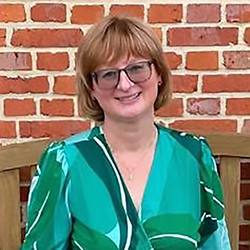
Annemie Froyen
UCLL
Green Chemistry
Abstract. This lecture introduces the fundamentals of Green Chemistry and its twelve guiding principles. The aim is to highlight the role of Green Chemistry in promoting sustainable engineering practices. Key strategies of Green Chemistry will be explored and illustrated with examples from the chemical industry, including the design of safer chemicals, the use of renewable feedstocks, the application of artificial intelligence in chemical engineering, and biomimicry.
Annemie Froyen is a chemist. She completed her master’s thesis through the Erasmus program at the University of Oxford in the field of spectroscopy and worked in the international chemical industry and in consulting for about 15 years, before switching to teaching. She enjoys working with young adults who are choosing a career in chemistry and values international exchanges, as they broaden one's perspective by exposing people to other cultures and ways of life.
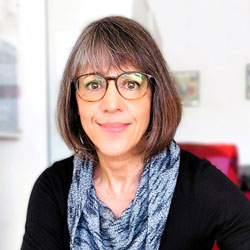
Cristina Rocha
LNEG
Enterprise Circularity
Abstract. This presentation addresses the topic of circular economy and the opportunity of creating business through circular design. It contextualizes the subject within current unsustainable consumption and production patterns, alongside overpopulation, which have breached planetary boundaries while failing to meet social needs. Particular emphasis is placed on the role of design in transitioning to a circular model, where materials and products are maintained at their highest value for as long as possible and waste is designed out. The session provides an overview of existing standards and tools to support companies in this endeavour, alongside real-world examples of more circular products and business models.
Cristina Rocha is a Principal Researcher at the Portuguese National Laboratory of Energy and Geology (LNEG), where she is deputy coordinator of the Resource Economics Unit and responsible for the research area of Circular Economy and Life Cycle Management for Sustainability. She leads national and international projects in the areas of circular economy, design for sustainability and life cycle management of products and services.
She holds a PhD in Environment and Sustainability, a MSc degree in Sanitary Engineering and a bachelor’s degree in Environmental Engineering and from NOVA University of Lisbon. Some recent projects she coordinated or in which she participated include ProSIMB - Study of the potential for industrial symbiosis in Portugal, Circo Hub Portugal (https://circohubportugal.lneg.pt), (De)construct for the Circular Economy, Study of Critical and Strategic Raw Materials and Circular Economy in Portugal (https://emaprice.lneg.pt/), CircularStart into Business (www.circularstart.eu) and KATCH_e, a knowledge alliance for the design of products and services and new business models for the circular economy (www.katche.eu).
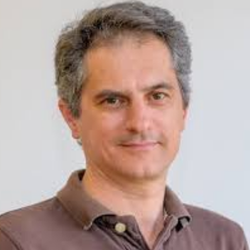
Filipe Barata
ISEL
Energy Efficiency for a Sustainable Future
Abstract. This talk explores energy efficiency in buildings, industry, and European appliance energy labelling as a comprehensive framework for systematically analysing and minimizing energy consumption. Key areas of focus include major energy-consuming equipment in buildings and industrial processes, such as HVAC systems, lighting, motors, and others. The analysis examines strategies to reduce energy demand, such as implementing advanced technologies, optimizing operations, and leveraging renewable energy sources. The role of the European appliance energy labelling system is also highlighted by showing some requirements examples for different equipment’s, emphasizing its impact on promoting energy-efficient choices among consumers. The aim is to provide actionable insights into reducing energy consumption while aligning with European sustainability and climate objectives.
Filipe Barata is Professor at Instituto Superior de Engenharia de Lisboa (ISEL). He held a PhD in Electrical Engineering and Computers and a Postgraduate degree in Energy Management - Energy Efficiency and Post-Graduation in Electric Engineering. He was project manager in a consulting and auditing engineering company where he carried out dozens of audits and energy certifications in buildings and facilities. In the electrical engineering department, he teaches and he is responsible for the electrical installations design and energy efficiency disciplinary group and also for the Pos Graduate in Design and Maintenance of Electrical Installations. He has several publications in journals, books chapters and conferences proceedings in renewable energies, intelligent control systems, energy efficiency and smart grids areas.
He is a reviewer of different International Journals (Elsevier, MDPI) and Reviewer Board Member of Energies Journal (Open Access by MDPI).
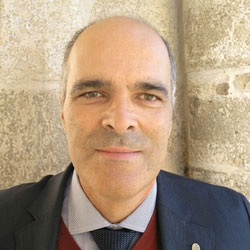
João Silva
ISEL
Life cycle assessment
Abstract. Life Cycle Assessment (LCA) is a methodological framework for evaluating the environmental impacts associated with all the stages of a product's life, from raw material extraction through manufacturing, use, and disposal. LCA helps in understanding the environmental impacts of a product or service, including energy consumption, emissions, and waste generation, across its entire life cycle. This session will show to students the basic modelling steps in openLCA using an example of plastic bottles for packaged drinking water.
João Silva is a Chemical Engineer and holds a PhD in Chemical Engineering. He is a Coordinator Professor at the Chemical Engineering Department at ISEL-IPL, Portugal. He is a Researcher at ZeolCat CQE IMS, Portugal. His research activity is in the areas of heterogeneous catalysis, development of pilot equipment, study of models for process control and process simulation. He is co-author of more than seventy articles in scientific journals, sixteen book chapters, more than one hundred conference publications and three patents. He teaches in the areas of Sustainable Product and Process Design and Process simulation.

Marco Berger
Tugraz University
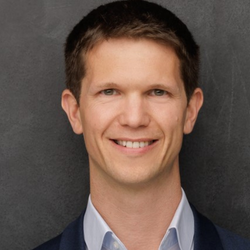
Volker Koch
Tugraz University
R-Strategy Implementation - Intensive Companies
Abstract. Sustainable business practices and circular economy concepts are gaining increasing importance in modern organizations. This lecture focuses on the analysis of R-strategies (e.g., Refuse, Rethink, Recycle) implemented by EU-regulated, technology-oriented companies. Selected companies from various industries are systematically examined based on their sustainability and CSR reports. Identified R-strategies are documented with textual evidence and evaluated using a standardized rating scale. The lecture provides a structured overview of how R-strategies are applied in practice, their degree of implementation, and their integration within organizational structures.
Business Model for Circular Economy // Value Proposition Design
Abstract. This lecture introduces the Business Model Canvas as a practical framework for visually and systematically organizing business models. Key elements, including customer segments, value propositions, revenue streams, and key resources, are examined in detail, highlighting their interconnections. Furthermore, the basics of Value Proposition Design will be explained. The aim of this lecture is to provide a deep understanding of how to develop a business model aligned with circular economy objectives.
Marco Berger is a researcher and lecturer at the Institute of Business Economics and Industrial Sociology at Graz University of Technology (TU Graz). His research focuses on business-to-business sales management, and he teaches various courses in business economics.
Volker Koch, Ph.D. is a Senior Lecturer of the Institute of Business Economics and Industrial Sociology at Graz University of Technology (TU Graz). His current research interests are in the field of “Engineering Education”. Besides, he teaches several lectures and exercises in the field of Business Economics and social skills.
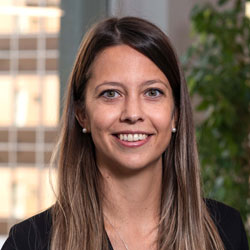
Margherita Molinaro
UNIBZ
Circular Product Design
Abstract. In the transition from a linear to a circular economy, circular product design represents a key approach to rethinking products, materials, and value creation. This seminar introduces the principles of circular economy and discusses core circular product design strategies, such as circular inputs, design for long life, and design for disassembly, supported by illustrative examples. It then highlights the importance of complementary enablers, including consumer engagement, reverse logistics, and digital technologies, emphasizing the need for a systemic perspective. Finally, the seminar addresses the effectiveness of circular product design by discussing empirical evidence on its relationship with environmental performance and emissions. By the end of the lecture, students will gain a critical understanding of the potential and limitations of circular product design.
Margherita Molinaro is Assistant Professor in Management Engineering at the Free University of Bozen-Bolzano, Italy. She graduated in Management Engineering and holds a PhD in Industrial and Information Engineering from the University of Udine, Italy. Her research focuses on sustainability and circular economy, as well as new technologies for operations and supply chain management. She has published her work in leading peer-reviewed journals, including International Journal of Production Economics, International Journal of Production Research, Journal of Business Logistics and Journal of Purchasing and Supply Management. In her teaching role, she leads courses at the Master's level on “Digital Transformation and Sustainability Management”, “Economics and Management of Energy Systems” and “Product Development”. She serves as Secretary General of the European Decision Sciences Institute.

Rita Pereira
ISEL
How to communicate and present my work
Abstract. This activity focuses on equipping students with the skills and knowledge required for an effective final presentation. The session will cover best practices and norms for delivering oral presentations using PowerPoint, emphasizing clarity, structure, and impactful communication. Additionally, students will receive targeted feedback on their previous presentations, identifying areas for improvement and strategies to enhance their performance. This activity aims to support students in presenting their sustainable engineering projects with confidence, professionalism, and adherence to standards of academic and technical communication.
Rita Pereira has PhD in Mechatronics and Energy Engineering – Évora University; Excellency in Problem Based Learning by UNESCO CHAIR; MSc. in Electrical and Computer Engineering – Instituto Superior Técnico; Graduated and Bsc. in Electrical Engineering – Instituto Superior de Engenharia de Lisboa. She is Adjunct Professor since 2015 in ISEL, lecturing Electrical Machines, Intelligent Systems and Energy Storage Systems. She has authored or co-authored several publications in conference proceedings, journals, and book chapters, mainly in smart grids and engineering education area. Also, she has been researcher of about a dozen research projects in electrical engineering area and engineering education. Rita Pereira is a member of Portuguese Engineers Order and Engineering Education Portuguese Society, having coordination activities in the field of Gender and Diversity in Engineering Education.