

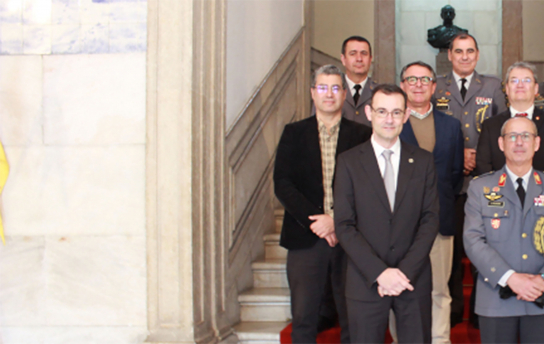
ISEL and the Military Academy signed a cooperation protocol on March 20th, reinforcing the commitment of both institutions to the development of entrepreneurial and innovative skills.This partnership aims to carry out Research, Development and Innovation (R&D&I) projects, disseminate scientific knowledge, and promote the exchange of resources and experiences between the parties involved, with particular attention to strategic areas of interest to both institutions, including national security and defense.Following the protocol ceremony, a visit to the Bemposta Palace facilities took place, along with the traditional photograph on the interior staircase. Texto e imagens: Academia Militar

ISEL is launching its first doctoral programme, the PhD in Cyber-Physical Systems for Sustainable Development (CPS-SD), which will begin in the 2026/2027 academic year, marking a historic milestone for the institution.The programme represents a decisive step in strengthening ISEL’s role in advanced education and research in engineering and technology. It reinforces the institution’s position as a reference in engineering higher education, innovation, and applied research, while also highlighting its strategic commitment to internationalisation and sustainability, through a doctoral programme taught in English and focused on global technological challenges.According to the President of ISEL, Professor José Nascimento:“The approval of this programme represents a key milestone in fulfilling ISEL’s commitment to further strengthening its position within the field of engineering research.”Engineering and technology for sustainable developmentFully taught in English, the programme has been designed for both national and international students, promoting a global academic environment aligned with the major technological and societal challenges of the 21st century.With a duration of four years (240 ECTS), the PhD focuses on applied research in Cyber-Physical Systems. Building on the expertise of ISEL’s academic staff and researchers in areas such as sensing, computation, communication, and control of physical processes, the programme is dedicated to the development of technological solutions that enable intelligent real-time interaction between the digital and physical worlds.These systems form the technological foundation of strategic areas such as smart cities, resilient infrastructures, sustainable energy systems, digital health, and advanced industry.The programme promotes technological solutions aligned with the United Nations Sustainable Development Goals, placing engineering at the service of global challenges such as environmental sustainability, energy efficiency, and digital transformation.Interdisciplinary education and researchThe PhD brings together scientific expertise from several areas at ISEL, including electronic engineering, computer engineering, physics, and biomedical engineering, long recognised both nationally and internationally in academia, research, and collaborative projects with leading R&D partners.During the first year, students attend advanced courses covering topics such as sustainable development, research methods and scientific ethics, foundations of cyber-physical systems, and technological innovation.In the following years, doctoral candidates focus on developing their research project leading to the doctoral thesis, contributing to the advancement of scientific and technological knowledge.A new step for ISELThe approval of this programme represents an important step in implementing ISEL’s strategy as a reference institution in engineering research, strengthening its capacity to train researchers and specialists capable of leading high-impact technological projects.With this PhD programme, ISEL opens a new chapter in its academic history, strengthening the link between education, research, and innovation, and contributing to the training of professionals prepared to address major technological and environmental challenges.More information about the programme here.
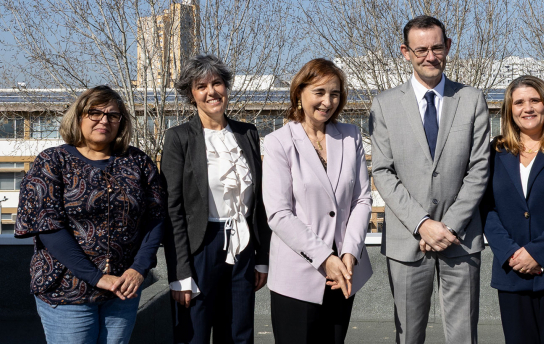
On February 26th, ISEL formalized a collaboration protocol with the Authority for Working Conditions (ACT), clearly reinforcing its strategic commitment to promoting Occupational Safety and Health.The ceremony was attended by the Inspector-General of the ACT, Dr. Maria Fernanda Campos. Representing ISEL were the President, Professor José Nascimento, the Vice-President, Professor Pedro Silva, the Director's Advisor, Professor Patrícia Barata, as well as the Head of the Hygiene, Safety and Health Unit, Eng. Paula de Castro, responsible for coordinating with the ACT for the implementation of the protocol, and the Heads of the Infrastructure and Equipment Management Service, Eng. Vanda Pacheco, and the Communication and Image Service, Dr. Marta Coelho.The main objective of signing this protocol was to reinforce the institutional importance of this partnership and promote the convergence of efforts between the two entities in promoting safe, healthy work environments aligned with best practices.The protocol establishes a framework for technical cooperation aimed at strengthening institutional coordination, encouraging the sharing of knowledge and best practices, and boosting joint initiatives. Among the areas of action foreseen, the prevention of occupational risks stands out, understood as a central element of consistent, planned action focused on the early identification and mitigation of potential risk situations.With this initiative, the ISEL Directorate reinforces its commitment to placing safety at the center of the institution's priorities, consolidating an organizational safety culture based on valuing and caring for people.Occupational Safety and Health is not only considered a legal obligation, but a continuous commitment to the safety, well-being, health, and quality of life of the entire academic community—an investment that contributes to a safer and healthier future for all, as assumed in the Occupational Safety and Health Policy.