
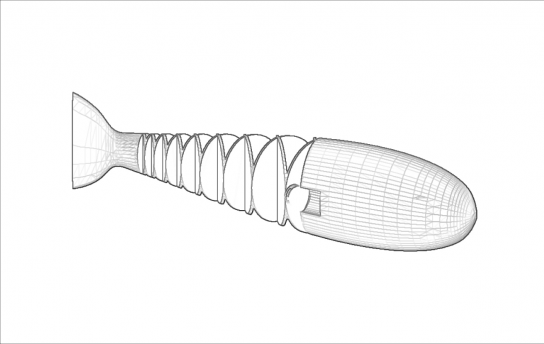
ISEL has recently registered, with the National Institute of Industrial Property (INPI), the design of a robot‑fish prototype developed by student Mário Nunes as part of his Master’s Final Project in Mechanical Engineering (MEM). The industrial property registration establishes a solid foundation for the future development of innovative solutions, promoting a better response to engineering challenges.The constructed prototype stands out for its use of FDM 3D‑printing techniques, enabling a single‑piece structure and self‑assembly, with a tail of complex geometry. This bio‑inspired design, manufactured in thermoplastic polyurethane (TPU), uses an optimized lattice mesh to provide lateral flexibility—essential for simulating natural swimming and reducing energy consumption during underwater locomotion.The multidisciplinary project was supervised by faculty members Mário Mendes (DEM/ISEL) and Tiago Charters (DM/ISEL). Prototype testing was carried out at the ISEL Digital Workshop, at the Industrial Automation Laboratory of DEM/ISEL, and at the Construction Materials Laboratory of Civil Engineering at DEC/ISEL.
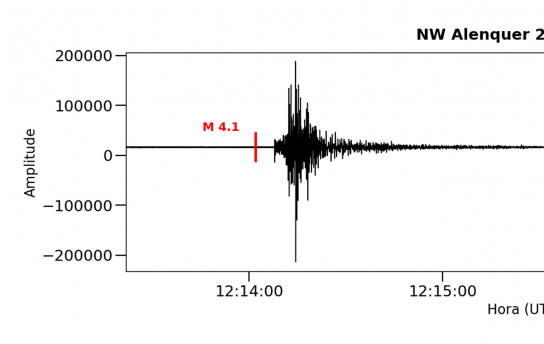
The R6379 seismic station installed on the ISEL campus by the geophysics group of the IDL@ISEL hub once again demonstrated yesterday its importance for monitoring local and regional seismicity. In the early afternoon of February 19, 2026, the station clearly recorded the two earthquakes that occurred in the Alenquer area.Due to their temporal and spatial proximity and their nearly identical characteristics, these two events can be considered doublet earthquakes, a term used when two earthquakes have very similar magnitudes, virtually coincident epicentres, almost identical waveforms, and occur in sequence, reflecting a common origin and a very similar rupture process. Relative amplitudes are shown on the y‑axis. The red lines mark the event times (12:14:02 for the 1st and 12:16:04 for the 2nd), as computed by the Portuguese Institute for Sea and Atmosphere (IPMA).The seismic signals were clearly recorded on the three components of the seismometer—vertical, north–south, and east–west—allowing precise identification of the arrival of P and S waves. The sensitivity of the short‑period sensor makes this station particularly effective for recording local or regional earthquakes. Integrated into the global network Raspberry Shake, which brings together thousands of sensors worldwide, this station enhances seismic monitoring capacity in the Lisbon region and complements the existing network. The recorded data are openly accessible, an approach aligned with the open‑science principles and societal engagement that guide the IDL@ISEL hub. You can consult the station’s earthquake records here.With this new recording, the station once again establishes itself as a scientific, educational, and civic tool, enabling students, researchers, and the public to follow the region’s seismic activity in real time.More information about these events is available on the IPMA website in the shakemaps information at this link, and on the EMSC website (1st Earthquake and 2nd Earthquake).You can view the earthquake records from the ISEL station here.
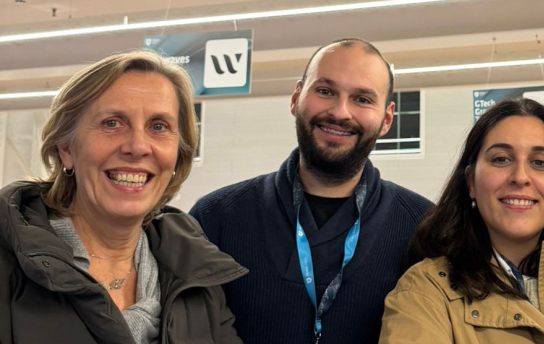
An innovative project with ISEL DNA is gaining prominence within the national innovation ecosystem. Ricardo Ferreira, an ISEL alumnus (Bachelor’s and Master’s in Chemical and Biological Engineering), is the CEO and Co-founder of Ripenew, a recently created technology start-up with a mission to combat post‑harvest waste in the fruit and vegetable value chain.Ripenew emerges from the direct transfer of scientific knowledge to the market, bringing together researchers and lecturers from various Higher Education institutions. The founding team includes two ISEL lecturers, João Miguel Silva (DEQ/ISEL) and Isabel João (DEQ/ISEL), reinforcing the School’s active role in promoting innovation with real societal impact.Sustainable technology serving the agri-food sectorThe start-up is developing a compact, reusable solution that removes ethylene, the natural hormone responsible for accelerating the ripening of fresh produce. By reducing the concentration of this gas during storage and transport, Ripenew’s technology extends shelf life, preserves quality, and significantly reduces waste, all without the use of chemicals — a clear response to one of the major sustainability challenges faced by the agri-food sector.From ISEL to the entrepreneurial ecosystemRicardo Ferreira’s journey illustrates the impact of ISEL in shaping professionals capable of transforming technical and scientific knowledge into sustainable business solutions. The creation of Ripenew also involves researchers from IST and CEGIST, as well as a patent submitted in October, co‑authored by the University of Lisbon, ISEL, and the University of Algarve, highlighting the collaborative nature of the project.Ripenew has already taken the stage at major innovation events such as the Web Summit and was recently represented at the Técnico Innovation Summit 2026, held on February 3, 2026, where the image illustrating this news piece was captured.Innovation with impactRipenew stands as a concrete example of how education at ISEL, combined with research and interinstitutional collaboration, can give rise to sustainable technology start-ups with the potential to transform food supply chains and contribute to a more efficient and responsible future.ISEL is proud to see its alumni and lecturers at the forefront of innovation, carrying the School’s knowledge further — from academia to the real world.