


A proposal submitted by ISEL has been selected under the EuroHPC Quantum Access Pilot Call, a European initiative providing experimental access to the new generation of high-performance quantum computers.The project, led by Manfred Niehus (DF/ISEL), has been awarded computing time on Euro-Q-Exa, a European 53-qubit quantum processor. The work will explore the use of quantum computing to support the synthesis of estimators and controllers for stochastic physical systems, with particular focus on non-equilibrium thermodynamics and optical-tweezer information engines.The research will be exploratory and comparative, assessing under which conditions quantum methods may complement conventional high-performance computing and FPGA-based real-time control.The award provides an opportunity to build expertise in applied quantum computing at ISEL and to explore new links between physics, control engineering, photonics and embedded systems.
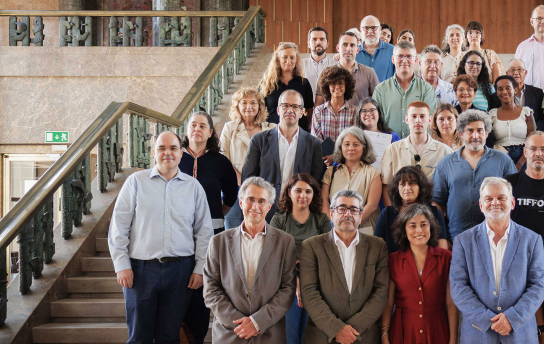
The PRODIGI Program (PROgramming, Information and Digital Citizenship) awarded Merit Scholarships to 18 graduates from the Polytechnic University of Lisbon (IPL) at a ceremony held on June 26, 2026, at the University of Lisbon, recognizing the academic merit achieved in the different modules of the training.The ceremony was attended by the president of IPL, António Belo, the pro-president of the IPL and scientific coordinator of PRODIGI, Cátia Vaz, the president of the Lisbon School of Education, Carla Rocha, and the vice-president of ISEL, Pedro Silva.The Merit Scholarships were awarded to the graduates who obtained the highest grades in the different modules of the program, according to the respective regulations.The following graduates were distinguished:Alda Maria VagarinhoAna Rita FonsecaEvelina CostaFernando AlmeidaJaime ReisJoão MartinsJoão SacramentoJoaquim PaulinoJorge LuisJorge SilvaJosé Carlos SantosJosé Manoel SantosLuis FrancoNuno PereiraNuno FerreiraPedro AntunesSusana GomesTeresa SoeiroDeveloped within a consortium between the University of Lisbon and the Polytechnic University of Lisbon, PRODIGI involves, in addition to ISEL, the Instituto Superior Técnico, the Faculty of Sciences, the Institute of Education, and the Lisbon Higher School of Education.Funded by Impulso Mais Digital, within the scope of the Recovery and Resilience Plan (PRR), the program aims to strengthen the digital transition in higher education, promoting the development of advanced and transversal digital skills within the academic community. The awarding of Merit Scholarships reinforces the commitment of partner institutions to promoting excellence, pedagogical innovation, and digital skills development, contributing to meeting the challenges of an increasingly digital society and labor market. [flickr-photoset:id=72177720334457283, size=q, num=10]Ver no flickr Imagens e texto GCI/IPL
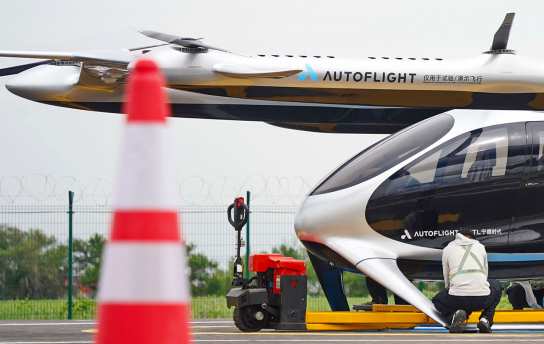
ISEL takes a new step in its commitment to high-impact technological areas with the launch of the Postgraduate Program in Advanced Drone Technologies. The new program, starting in the 2026/2027 academic year, is the result of collaboration between academia, research centers, and leading companies in the sector.Developed to meet the needs of a rapidly evolving market, this postgraduate program aims to prepare professionals to face the technological challenges associated with unmanned systems, an area with growing applications in industry, energy, infrastructure inspection, civil protection, security, and defense.One of the course's main differentiators is its highly specialized faculty, composed of researchers, experts, and professionals working in the sector, providing training strongly focused on business and technological realities.The postgraduate program is based on strategic synergies between ISEL and ISEL.ID – the Research, Development and Innovation Association, reinforcing the link between teaching, applied research, and innovation. In this context, partnerships have been established with leading entities such as TEKEVER and Speed-Bird, whose specialists and professionals are part of the program's faculty, providing students with close contact with the realities of the sector. The international dimension of the program is reinforced through collaboration with higher education and research institutions, including SENAI CIMATEC in Salvador, Bahia (Brazil), and Odessa National University of Economics (Ukraine), promoting knowledge sharing, scientific cooperation, and the development of joint projects.The first phase of applications for the Postgraduate Program in Advanced Drone Technologies will take place between July 17th and September 2nd, 2026, for a program that will begin in the 2026/2027 academic year. More information here.
ISEL will honour, for the first time in the 2025/2026 academic year, the student with the highest academic achievement in the field of Telecommunications through the creation of the ISEL Best Telecommunications Student Award.This initiative aims to recognise academic excellence and promote high standards in teaching and learning by rewarding the outstanding performance of students enrolled in the bachelor's degree programmes associated with the Department of Electronics, Telecommunications and Computer Engineering (DEETC).The award will be presented annually to the student who meets the criteria established in the regulations. These include achieving the highest average grade across the five highest-graded Telecommunications course units completed at the first enrolment, obtaining a minimum average of 16 out of 20, with no individual grade below 15 out of 20, and having no disciplinary sanctions.The distinction consists of the award of a diploma and may also be complemented by a cash prize, scholarship or another form of incentive. The award will be presented during ISEL's official Academic Year Opening Ceremony.

ISEL is launching a new PhD program in Decarbonization and Energy Transition, scheduled to begin in the 2026/2027 academic year. This is the institution’s second doctoral program, coming just two months after the launch of the program in Cyber-Physical Systems for Sustainable Development.The PhD program in Decarbonization and Energy Transition aims to train highly qualified specialists in this field—namely, professionals with a strong background in Engineering or related areas, capable of performing at the highest level in companies, regulatory bodies, higher education institutions, and/or research units. Their work will focus on the relevant and emerging areas of decarbonization and energy transition, from a dual perspective: technical, related to the design, sizing, and implementation of sustainable energy systems; and economic, enabling the assessment of financial resources involved, their profitability over the operational period, and their integration into energy markets.To achieve these goals, graduates are expected to acquire in-depth knowledge of energy source accessibility, energy generation and supply systems, environmental and sustainability implications, clean and low-carbon technologies, resource economics, constraints on implementation and operation, alignment with global energy issues, tariff-setting and regulatory strategies, and integration into global and regional energy markets.In addition to the coursework component, doctoral candidates will develop a thesis focused on specific aspects of this field, ensuring integration between Economics and Management and Engineering components. The theses will address real-world problems (even if conceptually), of high complexity, and will preferably be developed in a business environment. The study cycle will be taught entirely in person, with a total of 210 ECTS and an approximate duration of three and a half years.The teaching staff consists of PhD-qualified professors from ISEL in the fields of Engineering, Economics, Management, and Energy. Seminars featuring business-sector specialists, representatives from energy regulatory bodies, and researchers in these areas are also planned.
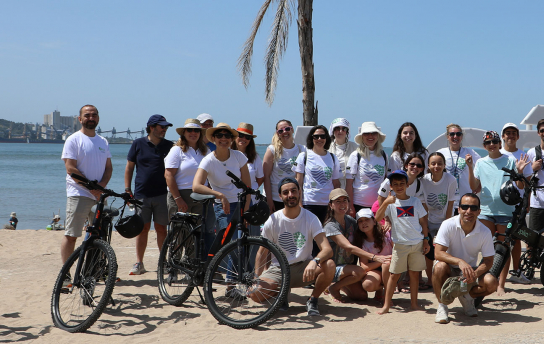
On May 23rd, Algés Beach once again hosted another initiative promoted by the Eco-Polytechnic of Lisbon, in collaboration with the Eco-Schools Councils of the various Organic Units and the Blue Flag Association for Environment and Education (ABAAE).The initiative was part of two complementary activities: the Ride Bike IPL, a cycling tour dedicated to promoting sustainable mobility, and the Clean Beach IPL, a coastal cleanup action focused on environmental awareness and the preservation of marine ecosystems.The Ride Bike IPL took place in the morning, starting at the Lisbon School of Health (ESSL) and ending at Algés Beach, encouraging more sustainable mobility habits.During the Clean Beach IPL action, various types of waste were collected, mostly small fragments of plastic, highlighting the importance of continuing to develop awareness and environmental intervention initiatives.The event was attended by students, faculty, and non-faculty staff from various IPL units, including ISEL, ESSL, the Lisbon Higher Institute of Accounting and Administration (ISCAL), and the Lisbon Higher School of Music (ESML), as well as the IPL Presidency Services.The activities concluded with a social gathering for all participants, accompanied by a snack provided by the Social Action Services of the Lisbon Polytechnic Institute (SAS-IPL), promoting sharing and strengthening the spirit of community.ISEL Eco-Campus once again joined this initiative, reaffirming its commitment to sustainability, sustainable mobility, and the promotion of environmental citizenship.Thank you to everyone who participated and contributed to the success of this event!Partners:Images GCI/IPL