

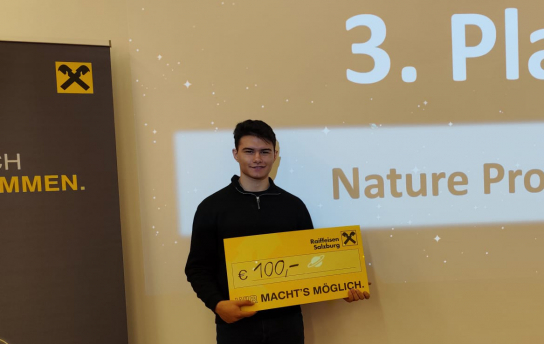
Miguel Alves, a student in the Bachelor's Degree in Computer Science and Computer Engineering, won 3rd place in the international ideaUP! 2025 competition, promoted by FH Salzburg – University of Applied Sciences in Austria, where he is currently studying as an outgoing Erasmus+ participant.He competed with the project Nature Protector, a startup he founded, facing dozens of applications from students, researchers, and entrepreneurs from various higher education institutions and Austria’s innovation ecosystem.Nature Protector proposes an integrated system for the prevention, detection, and response to forest fires, combining technology, data analysis, and coordination between entities, with the aim of protecting forests and rural areas, reducing environmental damage, and mitigating CO₂ emissions. The jury highlighted the strong social and environmental impact of the solution, as well as its implementation potential.The ideaUP! 2025 competition received 38 project submissions, evaluated by a specialized jury according to criteria such as degree of innovation, user benefit, differentiation, and economic viability. Achieving 3rd place represents significant recognition of the quality of the work developed by the ISEL student in a highly competitive international context.
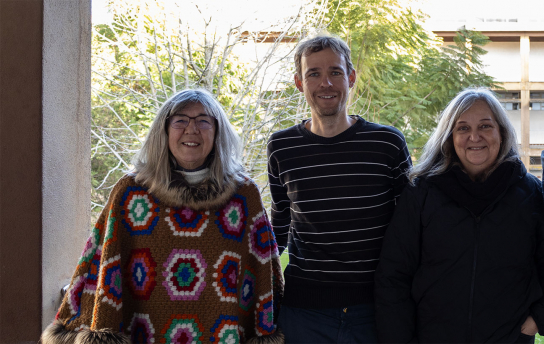
PT‑AQUASEIS is ISEL’s most recent scientific research project, led by Professor Graça Silveira (DF/ISEL). The initiative aims to introduce, for the first time in Portugal, the use of seismic ambient noise interferometry (SANI) as a tool for the continuous monitoring of aquifers in the south of the country.The project uses a network of more than 30 seismic stations, combining permanent and temporary stations, to quantify variations in subsurface physical properties induced by fluctuations in aquifer recharge and discharge. Results will be validated in the Querença‑Silves Aquifer, in the Algarve—one of the best‑characterized ground water systems in Portugal—through the joint analysis of seismic, piezometric, InSAR, GPS, and geoelectrical data.PT‑AQUASEIS is funded by the Foundation for Science and Technology (FCT) and developed by a multidisciplinary national and international team, with expertise in Physics, Seismology, Hydrogeology, Geophysics, and Geodesy. The IDL@ISEL team includes Graça Silveira (principal investigator), Alexandra Afilhado, David Schlaphorst, Joana Ribeiro, and Nuno Dias, and the project is associated with the Dom Luiz Institute research unit (UID).Project partner institutions include the University of the Algarve and FCiências.ID – Association for Research and Development of Sciences. Meeting the challenges of water scarcityPortugal faces a scenario of increasing water scarcity, particularly in the southern. Traditional methods of aquifer monitoring, although precise, involve high costs and have limitations in their temporal and spatial resolution.SANI thus emerges as a cost‑effective, continuous method with high temporal resolution, enabling detailed study of aquifer dynamics at the regional scale. This innovative approach opens the door to more sustainable water resource management and a also contributing to a better response to climate challenges.How does ambient noise interferometry work?Like seismic waves generated by earthquakes, waves produced by ambient noise sources propagate through the subsurface at velocities that depend directly on the physical characteristics of rocks—including density, elasticity, and porosity—and on their degree of saturation by fluids.Thus, significant fluctuations in the amount of stored groundwater cause perturbations in the stress state and in the pore filling of the geological materials that constitute aquifers, which are reflected in changes in the propagation velocity of seismic waves in the subsurface. Therefore, relative variations in propagation velocity can be used as a proxy to assess changes in the amount of water available in aquifers.This method makes it possible to evaluate transient processes such as recharge, depletion, or instability associated with overexploitation of the aquifer, seasonal fluctuations, or extreme events.Impact and disseminationProject results will be disseminated in international scientific journals, conferences, and workshops. The work will also involve students and early‑career researchers, amplifying academic impact.Beyond the scientific community, results will be shared with governmental and regional entities, including the Portuguese Institute for Sea and Atmosphere (IPMA), the Portuguese Environment Agency (APA), and municipal authorities, ensuring that the knowledge generated contributes directly to a better knowledge of water resources.PT‑AQUASEIS also includes outreach activities for society, notably through the Seismology‑at‑Schools initiative, bringing younger audiences closer to science and environmental monitoring.
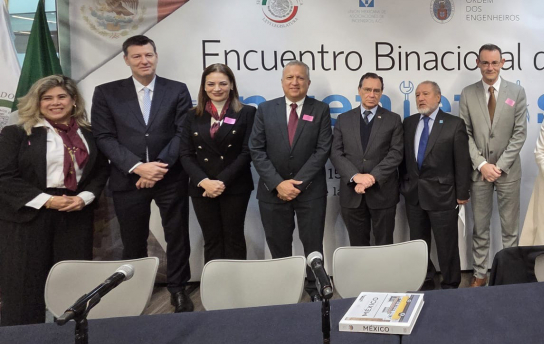
Between January 12 and 16, 2025, the President of ISEL, Professor José Nascimento, took part in the Mexico–Portugal Binational Engineering Meeting, held in the Senate of the Republic of Mexico, an initiative of the Unión Mexicana de Asociaciones de Ingenieros, A.C., in partnership with the Ordem dos Engenheiros of Portugal.ISEL’s participation resulted from an invitation by the Ordem dos Engenheiros, within the scope of representing Portuguese higher education in engineering, with the objective of bringing academia closer to the business sector and highlighting best practices in engineering training, establishing ISEL as a reference institution in this field.The President of ISEL took part in several discussion panels dedicated to engineering education, the engineering profession, and the international mobility of professionals, contributing to the reflection on education, qualification recognition, and cooperation between academic institutions, professional orders, and governmental entities from Portugal and Mexico.The program also included a visit to the facilities of Mota-Engil, a Portuguese company of international renown in the construction sector, currently responsible for part of the construction of the light-rail metro system in the city of Monterrey.
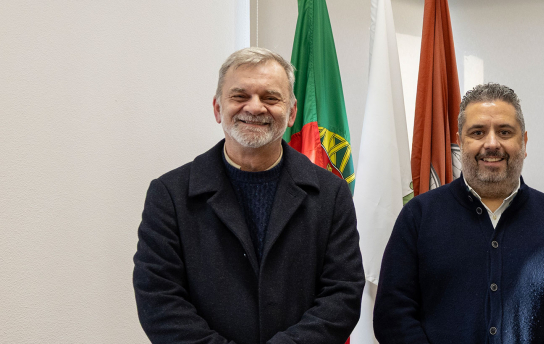
On 9 January, ISEL held the ceremony for the new President of the Council of Representatives (CR) for the 2025–29 term, Professor Pedro Miguens Matutino (DEETC/ISEL).The President of ISEL, Professor José Nascimento, opened the session by outlining the electoral process — after the election of the CR members, the president is chosen from among their peers — and informed that the vote took place on 6 January. He expressed his thanks to Professor António Silvestre (DF/ISEL) and the outgoing council for their work, and wished the new team success.Next, the President of the Polytechnic University of Lisbon (IPL), Professor António Belo, spoke, highlighting the central role of the Council of Representatives as a body representing the entire community — faculty, students, and technical‑administrative and management staff — and reaffirmed IPL’s support for this term, valuing the broader community vision associated with the future university framework of the polytechnic education.Pedro Miguens Matutino thanked the academic community for its trust and set out a programme based on collaborative work among faculty, students, and staff, focusing on consolidating internal processes and institutional development projects. “I’ve been at ISEL since 2002, I wear the shirt and I want to help the school move forward,” he said.See the photo album on Flickr.
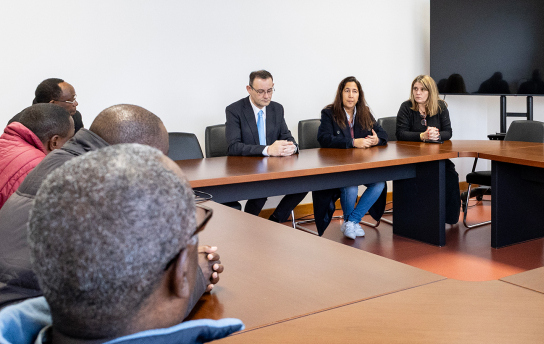
ISEL, together with the Polytechnic University of Lisbon (IPL), is part of the international consortium selected for the BRIGHTER project — Burundi Renewable Innovation Growth and Higher Education, funded by the Erasmus+ programme, with a total budget of around 1 million euros.ISEL‑IPL’s participation is ensured by a team composed of professors José Carlos Quadrado, Cristina Borges, Rita Pereira, and Carla Viveiros, strengthening the institution’s position in high‑impact international projects in the areas of Engineering, Pedagogical Innovation, and Sustainable Development.The BRIGHTER project aims primarily to enhance the quality of Higher Education in Burundi by training Engineering lecturers, modernising curricula, and developing skills in renewable energies and technological innovation, thereby promoting an effective connection between teaching, applied research, and sustainable development.The project’s kick‑off meeting took place between 16 and 18 December 2025, with the IPL hosting the international partners. On 18 December, the delegation visited the ISEL campus, where they were welcomed by the President, Professor José Nascimento, the Vice‑President for Pedagogy and Quality, Professor Carla Viveiros, and the Sustainability Advisor, Professor Patrícia Barata.Led by the ENTER Network, the consortium also includes ESN STUBA, the Ministry of Education of Burundi, five Burundian universities, and KIT – Digital Innovation HUB. The project foresees the development of training activities, institutional capacity‑building, and academic cooperation over the next four years.This European funding represents an important recognition of the role of ISEL‑IPL in international cooperation and its contribution to the global challenges of energy transition and the enhancement of Higher Education.See the photo album on Flickr.